UK Vape Tax 2026: How Much More Will You Pay From October?

Tags Cloud
From October 2026, a new duty adds £2.20 to every 10ml of e-liquid you buy. Here's what it means for your favourite vape juice — and how to soften the impact before it lands.
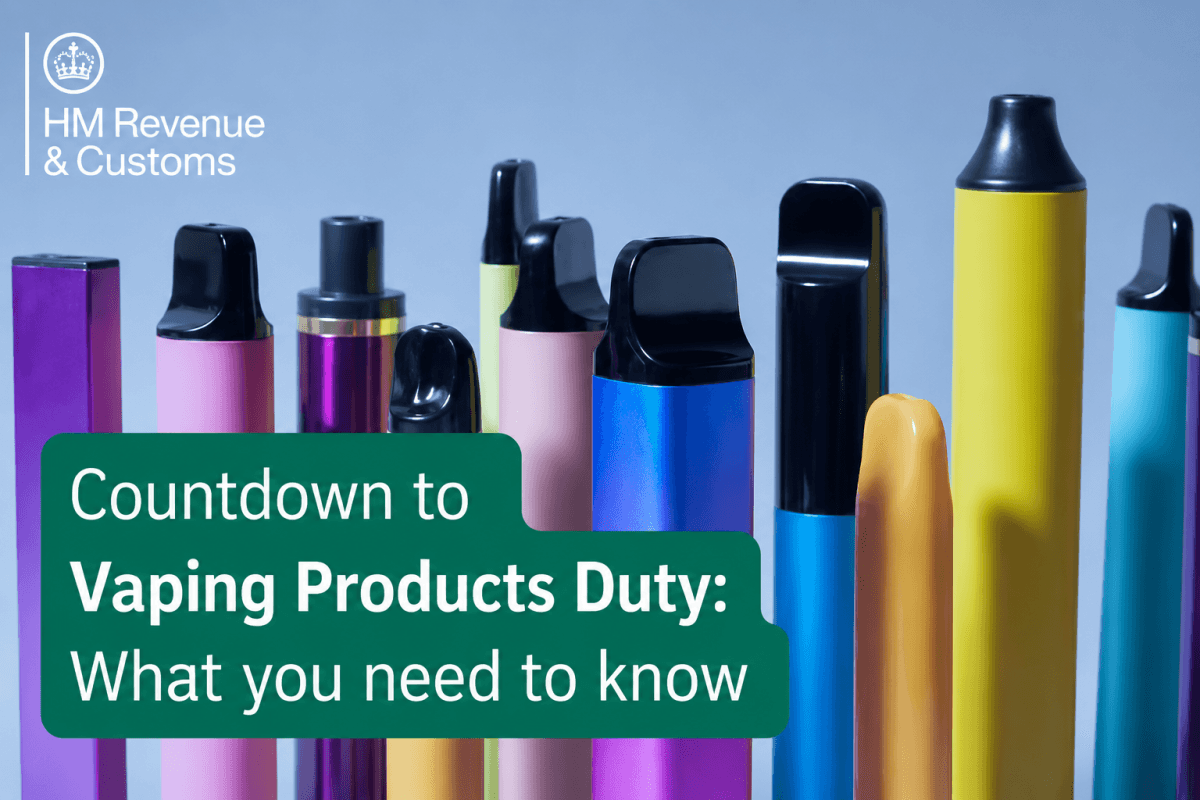
From 1 October 2026, a new UK Vaping Products Duty comes into effect, adding £2.20 to every 10ml of e-liquid you buy — including nicotine-free shortfills. If you're a regular vaper, this is the biggest change to vape pricing since the disposable ban, and it's worth understanding exactly what it means for your wallet before it lands. In this guide, we'll walk through what's changing, how much more you'll actually pay across different product types, why the tax is being introduced, whether vaping still beats smoking on cost, and — most importantly — what you can do now to soften the impact.
What's actually changing on 1 October 2026
The new duty applies per 10ml of e-liquid, regardless of nicotine strength or whether the liquid contains nicotine at all. That's an important detail: a 0mg shortfill you use purely for cloud-chasing or flavour will be taxed at exactly the same rate as an 18mg nic salt. There's no exemption for nicotine-free products, and no sliding scale based on strength.
The duty is charged at the point of supply, which in practice means it will be baked into the shelf price you see — you won't see it itemised separately at checkout in most cases, similar to how VAT is already included in the price you pay today.
Prefilled nic salt e-liquid pods and 10ml bottles will see smaller, but still noticeable, increases, since the duty is calculated per 10ml rather than as a flat fee per product. Larger bottles and shortfills will see the largest cash increases in absolute terms, simply because they contain more millilitres of liquid.
Why is the government introducing this tax?
The new duty is part of a broader shift in how the UK taxes nicotine products. Historically, e-liquid has attracted VAT but no product-specific duty, unlike tobacco. The government's stated rationale is to bring vaping taxation more in line with the wider nicotine and tobacco taxation strategy, while still preserving a meaningful price gap between vaping and smoking, since vaping is still viewed by public health bodies as a harm-reduction tool rather than a product to be taxed out of existence.
The UK isn't alone here — several EU countries have already introduced comparable e-liquid duties over the past few years, and the UK's rate is broadly in line with those precedents rather than being a global outlier.
How much more will you actually pay?
Here's a breakdown of what the duty means in practice across common product formats, using current typical retail prices as a baseline.
| Product | Current Price (approx.) | Duty Added | Price After Oct 2026 |
|---|---|---|---|
| 10ml nic salt bottle | £3.99 | £2.20 | £6.19 |
| 10ml freebase bottle | £3.49 | £2.20 | £5.69 |
| 50ml shortfill | £9.99 | £11.00 | £20.99 |
| 100ml shortfill | £14.99 | £22.00 | £36.99 |
| Prefilled pod (2ml) | £4.99 | £0.44 | £5.43 |
Note: figures are illustrative estimates based on the published £2.20-per-10ml rate and are not a price guarantee. Actual shelf prices will depend on how individual brands and retailers choose to absorb, average out, or pass on the duty. Always check current pricing on our vape deals page.
The maths behind your personal cost increase
The real-world impact depends heavily on how much and what format you vape. Here are three rough monthly-spend scenarios to help you estimate your own increase:
Light vaper — one 10ml nic salt bottle per week
Roughly 4.3 bottles a month. At £2.20 extra per bottle, that's an additional £9.46 a month, or around £113 a year.
Medium vaper — one 50ml shortfill every two weeks
Roughly 2.15 bottles a month. At £11 extra duty per 50ml bottle, that's an additional £23.65 a month, or around £284 a year.
Heavy vaper — two 100ml shortfills per month
At £22 extra duty per 100ml bottle, that's an additional £44 a month, or around £528 a year.
These are illustrative averages rather than a guarantee of your own usage or spend — the honest answer is that the tax hits higher-volume users harder in cash terms, simply because duty scales with millilitres, not with how often you buy.
Edge cases worth knowing about
Does the tax apply to nicotine-free e-liquid?
Yes. Because the duty is charged per 10ml rather than per milligram of nicotine, 0mg shortfills and 0mg bottles are taxed exactly the same as nicotine-containing liquids. There's no current exemption for nicotine-free products.
What about e-liquid you mix yourself from concentrates and base?
At the time of writing, guidance on DIY mixing bases and flavour concentrates hasn't been fully clarified. If you mix your own liquid from separately purchased PG/VG base and flavour concentrate, duty treatment may differ from ready-mixed shortfills — we'd recommend checking HMRC guidance directly closer to October, as this is an evolving area.
Will subscription and multi-buy pricing still work the same way?
Multi-buy and subscribe-and-save pricing should continue to apply after October, but the underlying per-bottle cost will be higher across the board, since the duty is baked into the base price before any discount is calculated.
Will retailers pass on the full duty, or absorb some of it?
This will vary by retailer. Larger retailers with more purchasing power may be able to absorb part of the increase through supplier negotiations, while smaller independent shops may need to pass on the full amount. It's worth comparing prices across retailers once the change lands, rather than assuming every shop will price identically.
Will vaping still be cheaper than smoking?
Yes — even with the new duty, vaping remains substantially cheaper than a 20-a-day cigarette habit over a year. A pack-a-day smoker in the UK typically spends well over £4,000 a year on cigarettes at current prices. Even a heavy vaper facing an extra £500+ a year in duty is still likely to be spending a fraction of that overall. The gap narrows, but it doesn't come close to closing.
We'll be publishing a full side-by-side cost comparison closer to the changeover — see our companion piece, "How Much Does Vaping Cost vs Smoking in 2026?" for the detailed breakdown.
What you can do now: a step-by-step plan
Step 1: Work out your monthly e-liquid usage
Check your last few orders or count empty bottles from the past month. This tells you roughly how many millilitres you go through, which is the number that actually determines your tax exposure.
Step 2: Decide how far in advance to stock up
A sensible target is 2–3 months' worth of your regular e-liquid — enough to meaningfully soften the October price jump without buying so much that flavour degrades before you get through it.
Step 3: Prioritise your highest-volume products first
If you use a mix of formats, put your stock-up budget toward shortfills and larger bottles first, since they carry the largest absolute duty increase.
Step 4: Use multi-buy deals to compound the saving
Combining a pre-October purchase with an existing multi-buy offer — such as our cheap vape juice deals — gives you two discounts stacked together: today's lower base price, and the multi-buy saving on top.
Step 5: Set a firm budget
It's easy to over-buy when a deadline creates urgency. Decide on a number before you start shopping, and stick to it — the goal is smart timing, not stockpiling.
How does this compare to other countries?
The UK isn't introducing this duty in isolation. Germany, Italy and several other EU member states already apply per-ml e-liquid duties, with rates that land in a broadly similar range once currency and typical bottle sizes are accounted for. Some countries tax e-liquid by nicotine strength rather than a flat per-ml rate, which the UK has chosen not to do — meaning the UK's approach is simpler to calculate, but doesn't give any relief for lower-strength or nicotine-free products the way some other countries' systems do.
For context, a handful of countries have gone significantly further and introduced outright e-liquid flavour bans or heavily restricted online sales alongside taxation. The UK's approach so far has stopped at taxation rather than restricting product availability, which is one reason public health groups have broadly described the policy as a revenue and harm-reduction balancing measure rather than a restriction on vaping itself.
Could the duty increase further in future?
It's reasonable to expect the rate could be reviewed in future fiscal events, in the same way tobacco duty is adjusted at most Budgets. Nothing has been confirmed beyond the October 2026 introduction and rate, but vapers who want to avoid future uncertainty may find it worth locking in a supplier relationship — such as a subscribe-and-save plan — that can absorb rate changes more predictably than one-off purchases.
What this means for retailers, not just vapers
It's worth understanding the other side of this change too. Retailers will need to update pricing systems, potentially renegotiate supplier contracts, and decide how much of any margin pressure to absorb versus pass on. Larger retailers with stronger buying power — including multi-store chains — are generally better placed to soften the impact for customers than very small independent shops, which is one reason you may see more price variation between retailers after October than you're used to seeing today.
A quick summary before you plan ahead
- The duty starts 1 October 2026 and adds £2.20 per 10ml of e-liquid, nicotine or not.
- Larger shortfill bottles see the biggest cash increase; small nic salt bottles the smallest.
- Vaping remains substantially cheaper than smoking even after the change.
- Stocking up 2–3 months ahead, using multi-buy deals, is the simplest way to soften the impact.
- Prices may vary more between retailers after October, so it's worth comparing before you commit to a supplier.